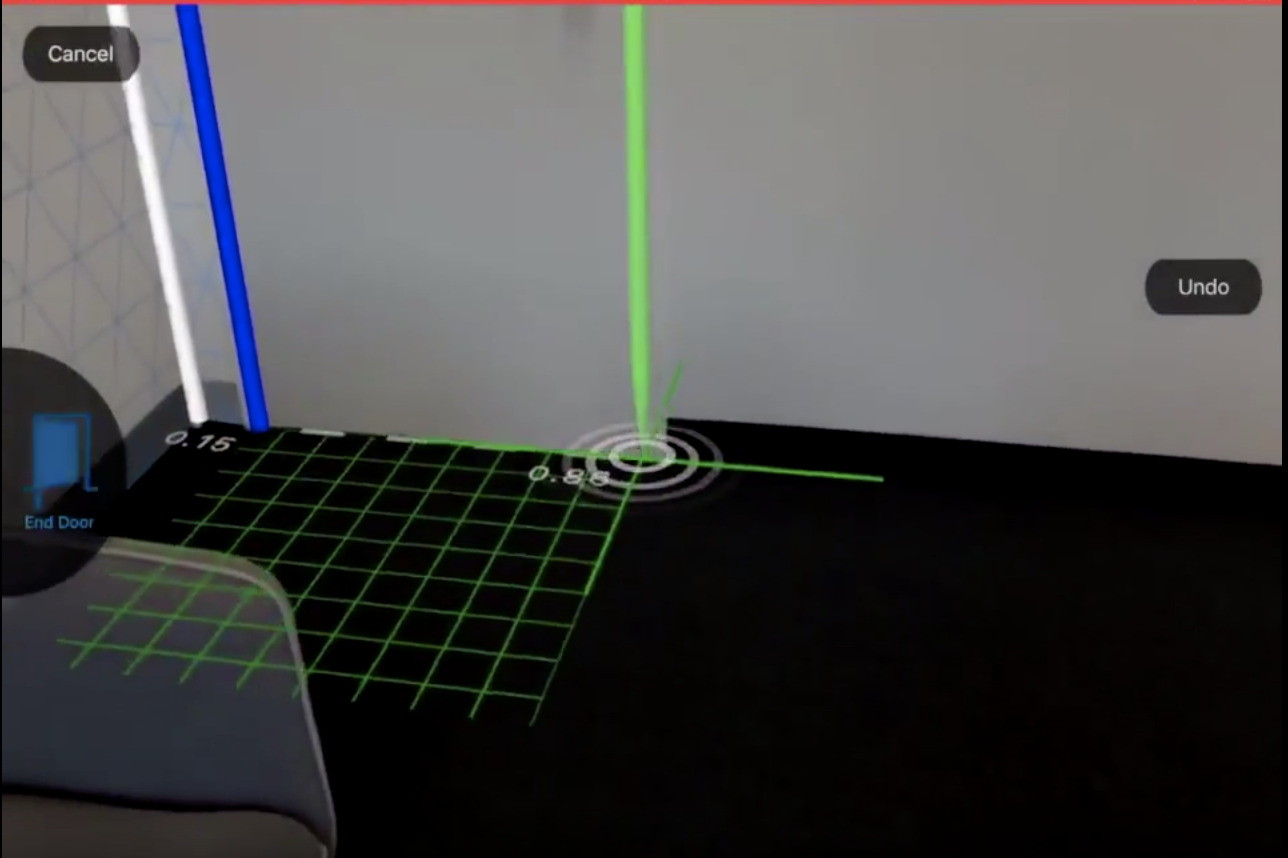
Magicplan lets users measure floor area by detecting walls, corners and other elements of an interior space. Once the user hovers on any space, virtual rulers are magnetized to a 3-plane perspective and denotes the measurement between corners, floors and walls.
I could immediately tell that this app would be a very helpful tool for Interior Designers or Architects. Since AR is very good at detecting a space in XYZ planes, this is where the technology is maximized to its fullest potential. Otherwise, the current alternative would be the good old measuring meter or leveler tool made of digital sensors.
It is also a perfect example of an idea that can drive Augmented Reality to reach mass market, case in point, a majority of American Home Improvement innovators who flock to stores and use rebuilding tools and gadgets to upgrade their homes.
Magicplan AR’s user experience taps into (NUI) natural user interface, where using the device becomes familiar gesture for users. Gestalt psychology’s law of closure tells us that “the brain tends to perceive forms and figures in their complete appearance despite the absence of one or more of their parts, either hidden or totally absent.”
In terms of design, I think it does a good job of providing the user a seamless user experience. As a virtual measuring device, the user is able to assign if the area is a corner or a door through the help of a button. Then it would automatically generate a whole floorplan based on those markers. The buttons were even carefully thought out it is placed on the sides so it’s near the user’s thumbs.

In terms of features, it was a thoughtful add-on that the app doesn’t only take measurements as meter rulers are capable of doing, floor plans are automatically generated after the identifying the complete measurement of a room. I’d say that the biggest challenge would be to ensure that the app is being trained to capture an accurate measurement and how it defines perspective angles.


I think Augmented Reality will flourish best when used in design industries, where it can be very helpful since people (both businesses and consumers) invest their money and time on continuous improvement, as it provides the highest quality of service to a design-conscious market. Ever since the advent of mobile phones, people now appreciate well-executed products can impact our daily lives.
As designers, we need tools that can help enhance productivity and should spend more time with creating the narrative of the content or creating features that inspira delightful user experience. This part of the design process can be complemented by the innovative uses of advanced technologies like AR.

 Happy Path Journeys