August 2024
| Title | ||
|---|---|---|
| Artificial Experience | Steve Wright | Great subtitle – We are eager to ask “Is this computer human?” but reluctant to ask, “What does it mean to be human?” |
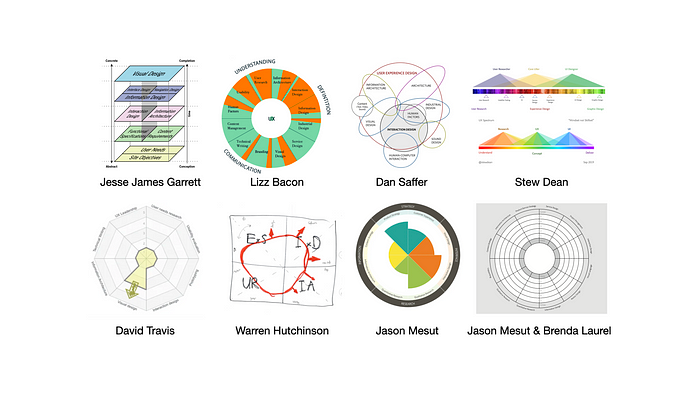
| A 24+ year dance of decoding UX | Jason Mesut | Jason was thoughtful enough to provide a interactivity – the maps represent mindsets of decoding UX. Check out the miro board |
| One-to-One: Book Review and analysis of What do we owe each other? by TM Scanlon | Thomas Nagel from The London | This article is a review of TM Scanlon’s article in 1998: What do we owe each other. There is room in Scanlon’s theory for a degree of relativism, in two senses. The first is what he calls ‘parametric universalism’, according to which the appropriate ways to show respect for certain general values such as privacy or loyalty will vary with different social conventions or traditions. The second is that people in different social circumstances or from different traditions may have reasons to accept or reject different principles. Some things, like killing people because of their membership in an ethnic or religious group you don’t like, are wrong everywhere, whatever people may think. But other things may be wrong in one culture but not in another, because of different conceptions of personal honour, for example. Neither form of relativism is inconsistent with the objective correctness of moral judgments. These are just ways in which morality includes some relativity in its content. |
| Using Job Stories | This is a guest post from Alan Klement describing how one team used the design technique of Job Stories to design a profile page in a product. | The biggest and most pertinent problem with Personas is this: Personas are imaginary customers defined by attributes that don’t acknowledge causality. |
| Inside Out: A Neuroscientist’s Perspective | BRB, reading. | [In the movie, the headquarters represent] the limbic system. It contains the hippocampus which is vital for the formation of episodic memories; memories that consist of a what, when, and where. The hippocampus is a deep structure in the brain shaped somewhat like a seahorse. As we see throughout the film, every time Riley experiences an event, a memory sphere of that event comes into Headquarters. This fits well with the current neuroscience research in many ways. Without a hippocampus the formation of new episodic memories is nearly impossible. One famous example of this is Patient H.M. who had his entire hippocampus removed due to severe seizures. The seizures stopped but HM was never able to form another episodic memory. Many researchers study the hippocampus in attempts to unravel the mechanisms which allow the hippocampus to form these complex memories. |
| Tech Humanism / Technology Makes Us Human by Reid Hoffman | BRB, reading. |
 Happy Path Journeys