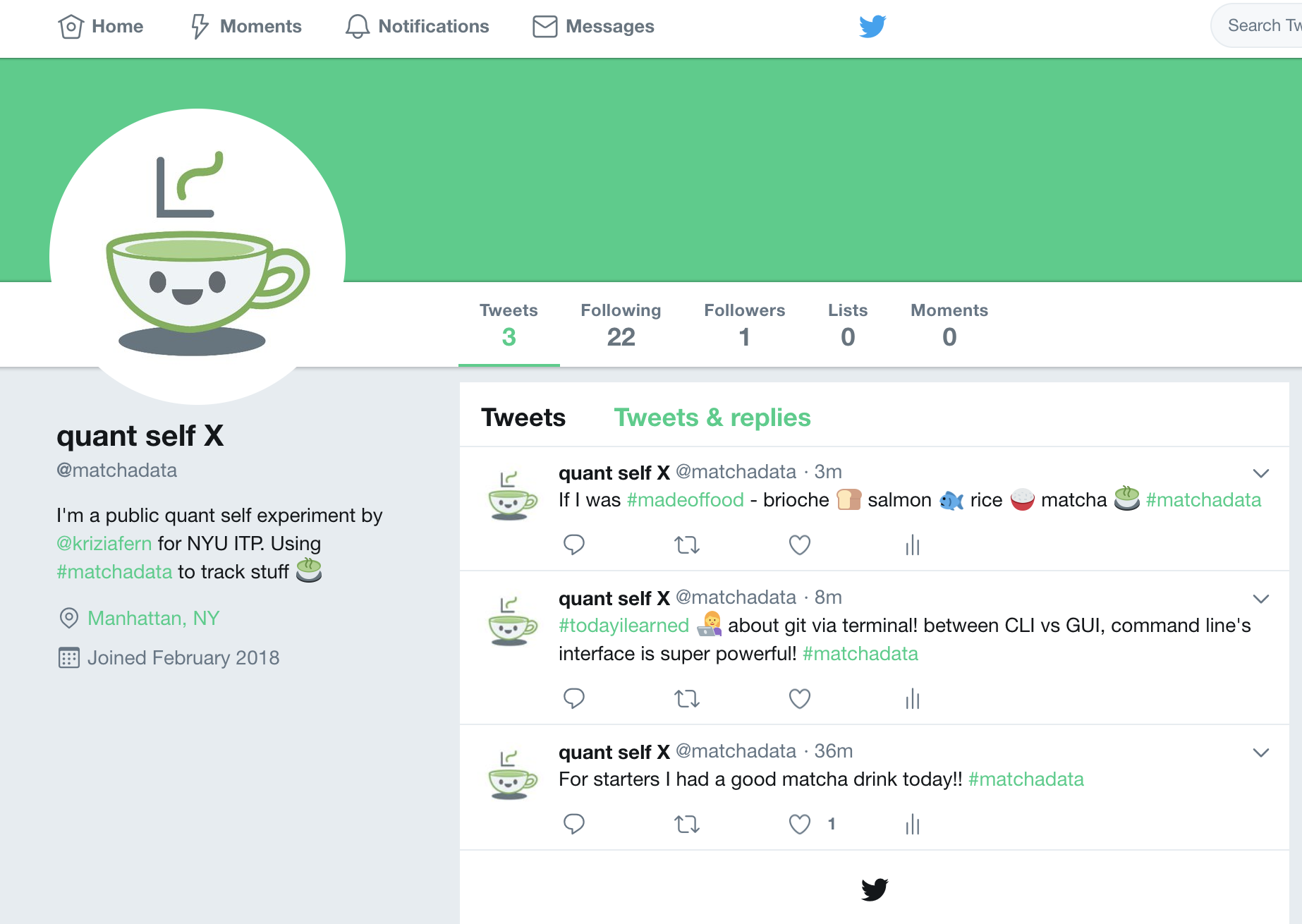
For this experiment, I was curious about the idea of public self-tracking as opposed to using apps that help me privately track things. So I have gone ahead and created a twitter account oddly named @matchadata.
The name originated from an idea I had, where the intent is to constrain user behavior, (like tinder-swipe for the quantified self) tracking which one I drank more in a day – iced coffee or matcha latte?
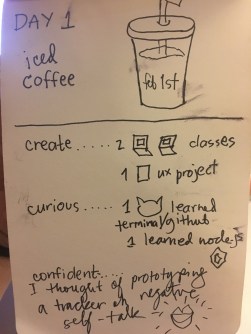
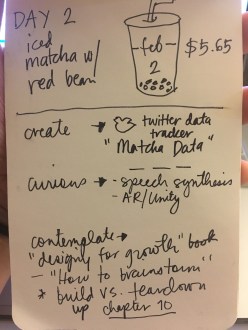
Prototyping using twitter, IFTTT and Google Sheets
Matcha Data will be my prototype tracker as I progress with this experiment, uncovering activities that I don’t mind sharing in public. I am adding category handles – #madeoffood, #todayilearned, I really want to collect as much over the period of 3 months!
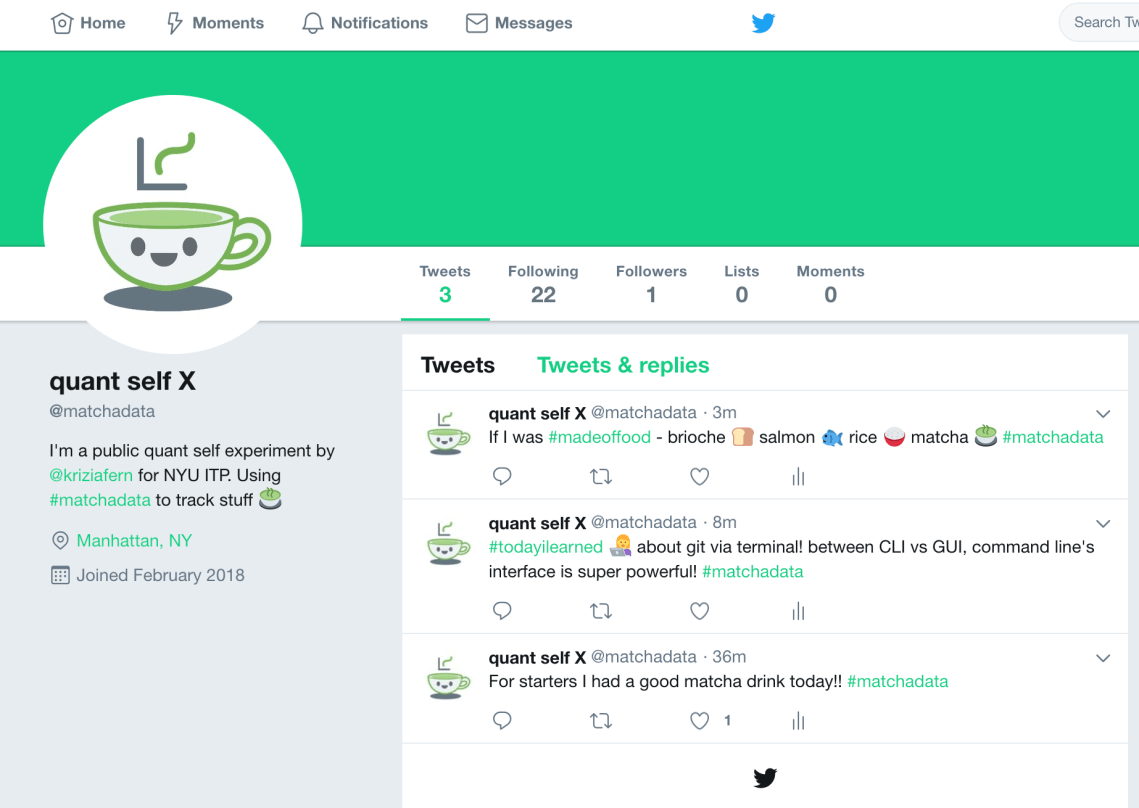
I will be using IFTTT to record my tweets automatically on google sheets. This way I can export all data easily into a csv file and parse into a .json file later on.
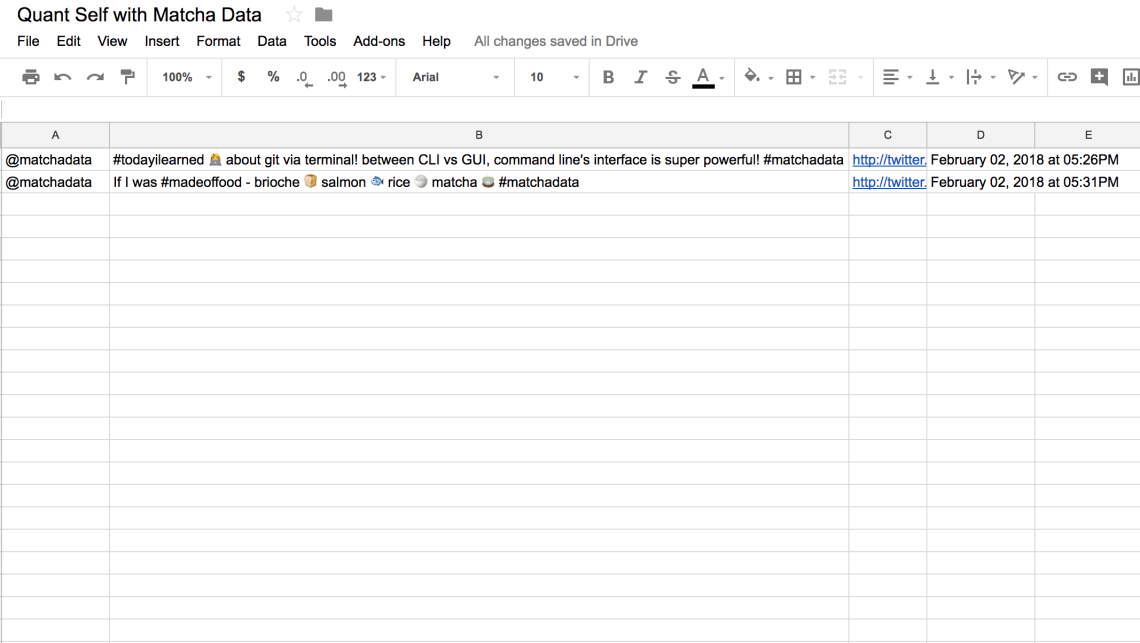
Thoughts on using twitter:
- Microblogging has incentives – The whole experience so far pushes the envelope on creativity of curating the self, with an underlying motivation to sustain data tracking
- Emojis – the potential for visualization is limitless
- Twitter APIs – the potential for translating Twitter data into generative art is limitless!
Overall, the ultimate goal of the experiment would be to understand the limitations what and what I cannot share about myself, maximum usage of emojis to track the activities, and discover as many categories that can come out of it.

 Happy Path Journeys
Hi Krizia!
Excellent. Thanks for your write up. It sounds like you’re on your way to start identifying some patterns.
Just a few initial thoughts:
+ Re #hashtags: might it be helpful to define a handful of meaningful categories now/early as a way to project what things you’d like to track? It sounds like you’re already doing this, but just to ensure that you can maintain as much consistency as possible.
+ Since your tracking is public facing, it would be good to note when and why you felt uncomfortable to publish your data. What do your data gaps look like? Can they be explained?
+ General comments:
1. Why are you tracking these aspects in the first place/What is your motivation? –> what is your central question
2. How many times a day you track or what prompts your tracking
3. How you plan to stay on track
4. How you plan to filter your data if necessary
5. what are similar projects which support your tracking behavior / how are you diverging in your own methodology?
6. why you believe your tracking method will lead to greater understanding of X, Y, or Z.
7. How/if you plan to self-experiment or change your behavior in any way / discuss the method of doing testing such as A/B/A/B testing, etc.
8. What is the temporal dimension of the phenomenon you’re tracking (e.g. after how long do you believe you can use your data to characterize your behavior)
LikeLiked by 1 person